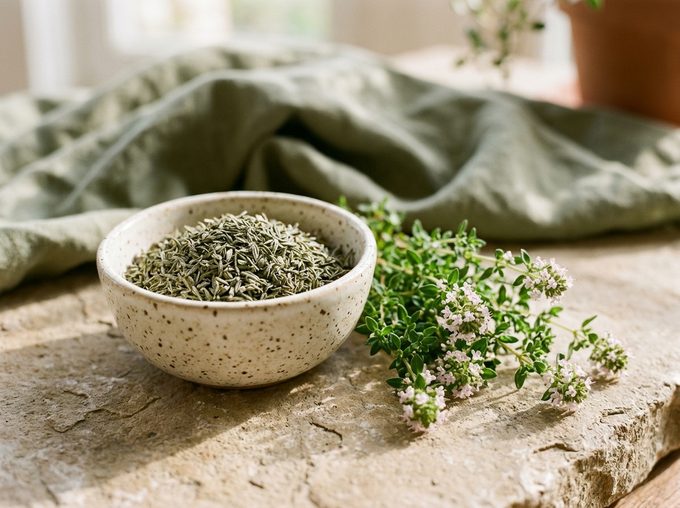
✦ HERBAL TRADITION • ESSENTIAL-OIL RICH MEDITERRANEAN SUBSHRUBS
Volatile Aromatics
Sun-drenched Lamiaceae herbs packed with thymol, rosmarinic acid, and cineole for culinary craft, covered infusions, and botanical steams.
🔬 Phytochemical Mechanism
Concentrated in the Lamiaceae (Mint) and Lauraceae families, volatile aromatics store low-molecular-weight monoterpenes and sesquiterpenes (thymol, carvacrol, menthol, 1,8-cineole, eugenol, and rosmarinic acid) inside microscopic epidermal glandular trichomes.
🌡️ Extraction & Steeping Protocol
ALWAYS steep covered at 195°F–205°F for 6–10 minutes. Let the condensation droplets on the underside of the lid drip back into your cup before drinking—those droplets hold the pure steam-distilled essential oil!
👅 Organoleptic Palate Signature
Immediately fragrant, warming or cooling, pungent, savory, and tingling on the tongue.
TRADITION COMPARISON TABLE
All 10 Volatile Aromatics Compared by Compound & Steep Ratio
| Botanical & Binomial | Plant Part | Key Phytochemicals | Organoleptic Palate & Aroma | Dose & Steep (8 oz) |
|---|---|---|---|---|
| Common Thyme Thymus vulgaris |
Aerial leaves & flowering tops | Thymol, Carvacrol, Linalool, Rosmarinic acid | Pungent, earthy, and camphoraceous with a warming clove-like thymol bite and a dry, slightly astringent finish. | 1.5 g – 2 g 200°F–205°F · 8–10 min |
| Garden Sage Salvia officinalis |
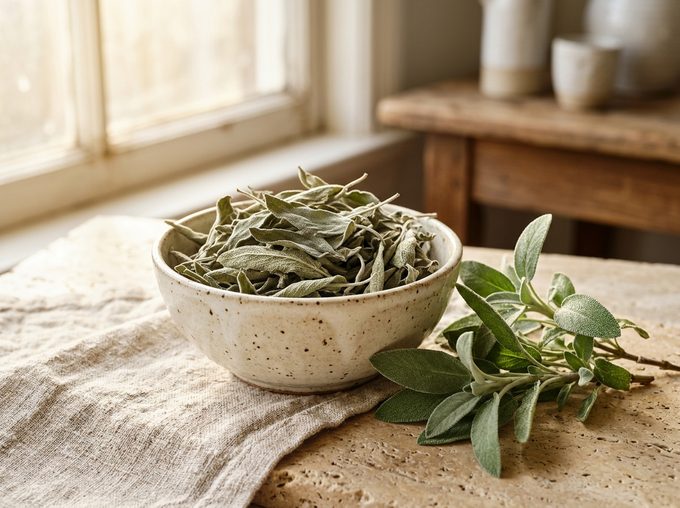
Whole or rubbed velvety leaves | Rosmarinic acid, Camphor, Cineole, Salvianolic acids | Savory, resinous, and slightly bitter-astringent with warm camphor, pine, and eucalyptus undertones and a velvety mouthfeel. | 1.5 g – 2 g (1 tbsp rubbed leaf) 200°F · 6–8 min covered |
| Rosemary Salvia rosmarinus |
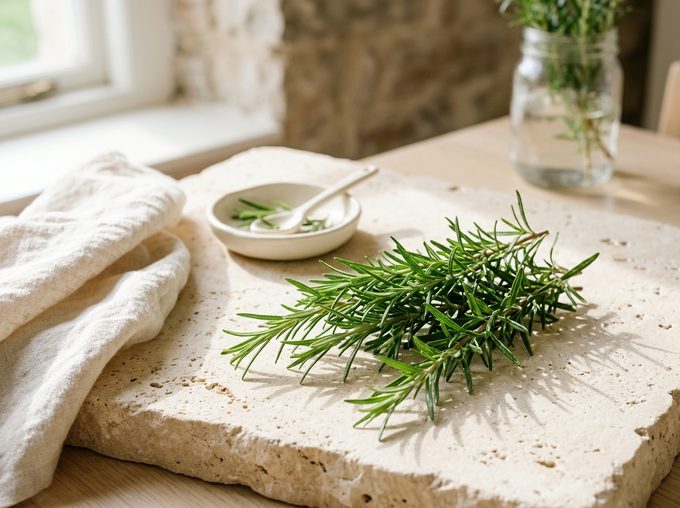
Evergreen needles & flowering sprigs | Carnosic acid, Rosmarinic acid, 1,8-Cineole, Alpha-pinene | Crisp, piney, resinous, and invigorating with bright 1,8-cineole, camphor, and woody balsamic notes. | 1.5 g 200°F–205°F · 7–10 min covered |
| Greek Oregano Origanum vulgare hirtum |
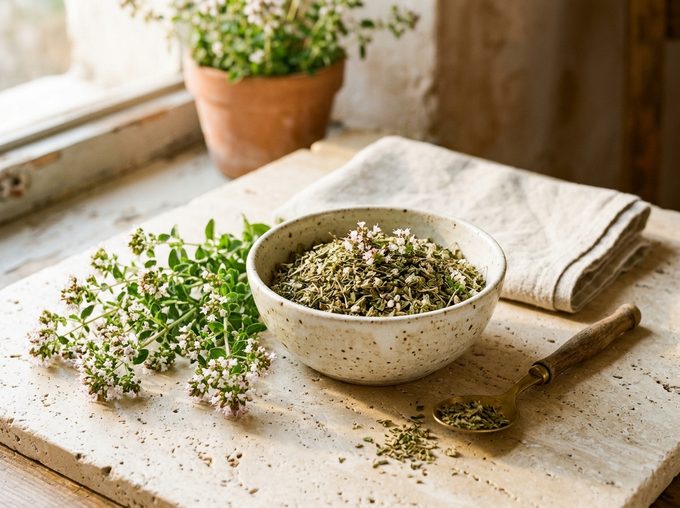
Dried leaves & flower buds | Carvacrol, Thymol, Rosmarinic acid, Beta-caryophyllene | Bold, fiery, savory, and peppery-warm with high carvacrol intensity that numbs the tip of the tongue slightly when chewed raw. | 1.5 g 200°F–205°F · 8–10 min covered |
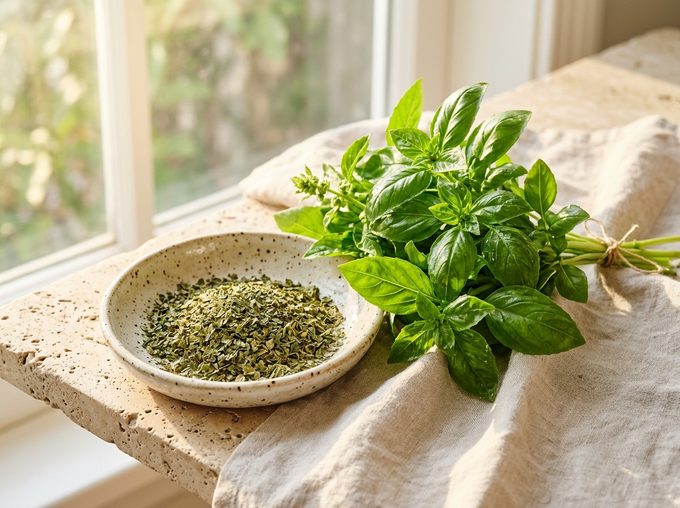
| Sweet Basil Ocimum basilicum |
Tender leaves & flowering tops | Linalool, Eugenol, Estragole, Citral | Lush, sweet-spicy, and floral-anise with warm clove and sweet linalool top notes. | 2 g dried (1 tbsp) 195°F · 5–7 min covered |
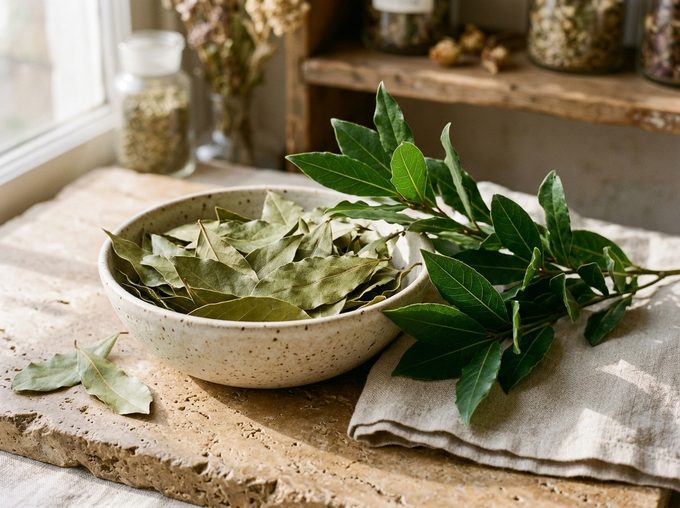
| Bay Laurel Laurus nobilis |
Whole leathery dried leaves | 1,8-Cineole, Eugenol, Linalool, Costunolide | Deeply balsamic, woody, and savory-herbal with layered notes of eucalyptus, clove, pine, and nutmeg. | 2–3 whole dried leaves (cracked in half) 205°F–212°F gentle simmer · Simmer covered 10–12 min, then let stand 5 min |
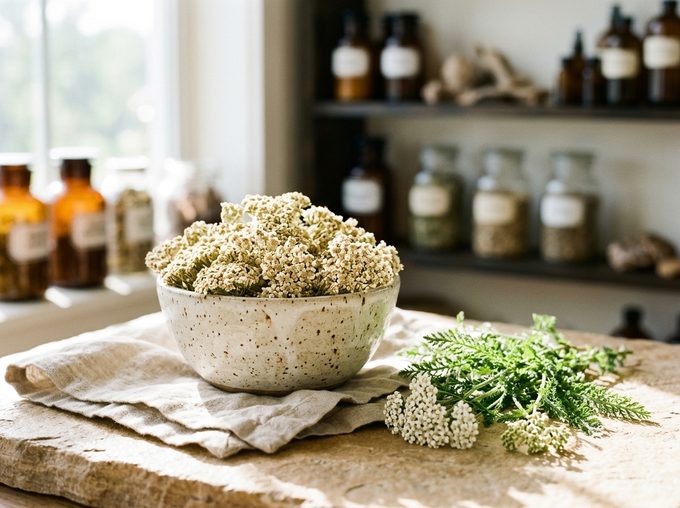
| Common Yarrow Achillea millefolium |
Flowering tops & feathery leaves | Chamazulene, Achilleine, Cineole, Camphor, Flavonoids | Aromatic, camphoraceous, piney-sage, and briskly bitter-astringent with a complex herbaceous nose. | 1.5 g – 2 g 200°F–205°F · 8–10 min covered |
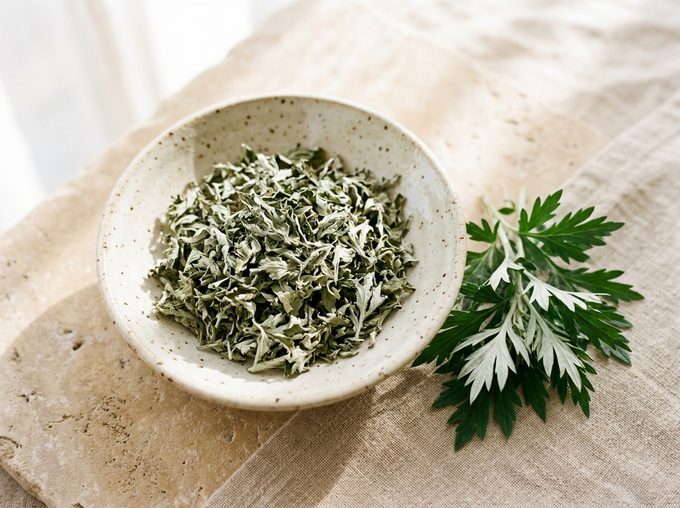
| Common Mugwort Artemisia vulgaris |
Dried leaves & flowering tops | 1,8-Cineole, Camphor, Vulgarin, Sesquiterpene lactones | Aromatic, sage-like, herbaceous, and moderately bitter with cool camphor, eucalyptus, and chrysanthemum-like notes. | 1 g – 1.5 g (1 level tsp) 195°F–200°F · 5–7 min covered |
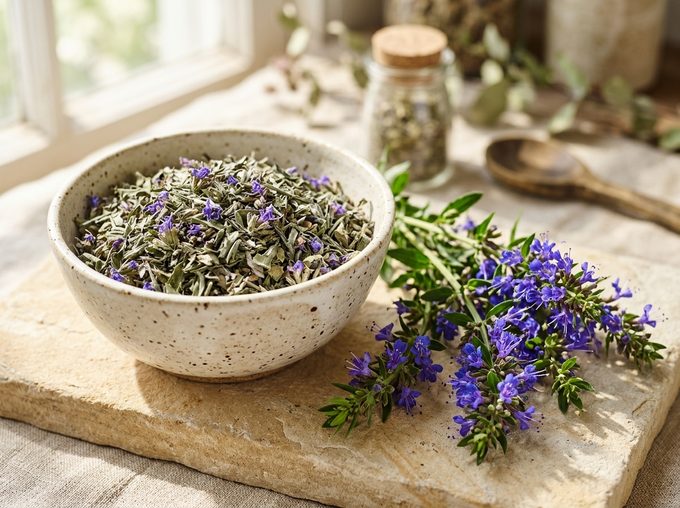
| Hyssop Hyssopus officinalis |
Flowering tops & narrow leaves | Marrubiin, Pinocamphone, Isopinocamphone, Diosmin | Warming, minty-camphoraceous, sage-like, and moderately bitter with a crisp pine-herbal finish. | 1.5 g – 2 g 200°F · 7–10 min covered |
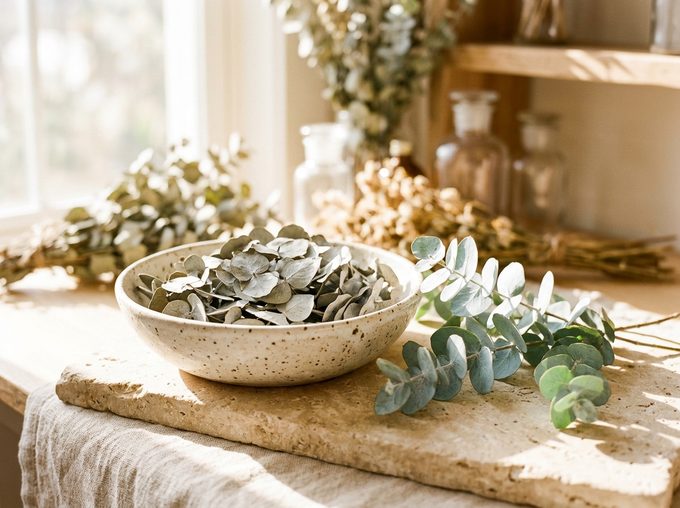
| Eucalyptus Leaf Eucalyptus globulus |
Mature leathery blue-green leaves | 1,8-Cineole (Eucalyptol), Alpha-pinene, Globulol, Tannins | Intensely cooling, camphoraceous, woody-pine, and briskly cineole-rich. | 2 tbsp crushed dried Eucalyptus leaves in 1 quart steaming water 200°F–212°F bowl on table · Drape towel over head, close eyes, and breathe steam for 5–8 min |
TRADITION FAQ
Frequently Asked Questions About Volatile Aromatics
Why do aromatic herbs work so quickly when inhaled or sipped?
Volatile terpenes are small, lipid-soluble molecules (<300 Daltons) that cross mucous membranes rapidly and stimulate olfactory bulb pathways and trigeminal cold/warmth receptors within seconds.
How can you tell if an aromatic herb has gone stale?
Rub a single leaf between your thumb and forefinger: if you don't smell an immediate burst of thyme, mint, sage, or rosemary, the glandular trichomes have oxidized and the herb should be replaced.
EXPLORE ALL 7 TRADITIONS & ENERGETICS TOOLS