Common Mugwort
Silver-Backed St. John's Plant of Dream Pillows & Old-World Lore.
Explore the common forms, learn a little about the plant, and choose what suits your cupboard.
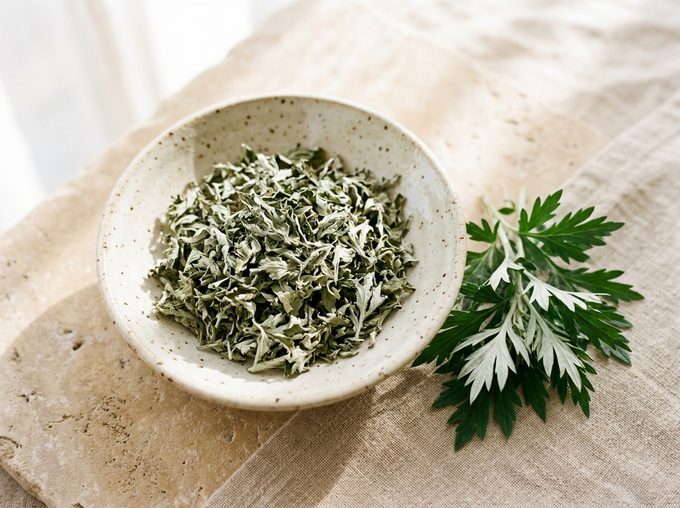
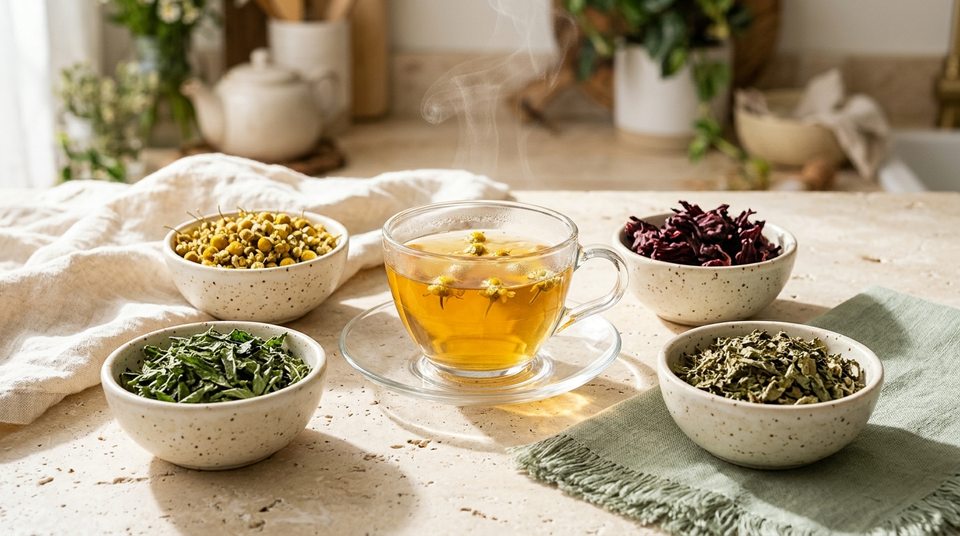
Whole dried common mugwort flowers for steeping and infusions.
A little about common mugwort.
The plant
Aromatic, sage-like, herbaceous, and moderately bitter with cool camphor, eucalyptus, and chrysanthemum-like notes. Native to Eurasia (Asteraceae (Daisy Family)).
The forms
Most often prepared as a light evening / digestive infusion using 1 g – 1.5 g (1 level tsp dried leaf) at 195°F–200°F (90°C–93°C) (5–7 min covered).
Before you choose
Check the label for the Latin name (Artemisia vulgaris), and choose the form that suits your cupboard.
Traditional uses & research +
Botanical taxonomy: Artemisia vulgaris (Asteraceae (Daisy Family)) · Tradition: Volatile Aromatics · Key constituents: 1,8-Cineole, Camphor, Vulgarin, Sesquiterpene lactones.
Curated collections: Evening Calm & Bedtime Infusions · Sacred Resins & Forest Aromatics · Seasonal almanac: August Almanac (Late-Summer Mediterranean Harvest).
Traditional background: Named in the Old English Nine Herbs Charm as the 'oldest of worts' and traditionally hung over doorways on Midsummer's Eve across Europe, or pressed into moxa wool in East Asia.
Everyday & kitchen uses: Sewn with lavender, chamomile, and hops into aromatic bedside dream pillows, burned as dried botanical incense, or steeped briefly.
Standard preparation methods (compare all 50 steeping temperatures):
- Light Evening / Digestive Infusion (1 g – 1.5 g (1 level tsp dried leaf) at 195°F–200°F (90°C–93°C)): 5–7 min covered
- Aromatic Dream Pillow Sachet (2 tbsp mugwort + 2 tbsp lavender + 2 tbsp chamomile + 1 tbsp rose petals at Dry linen sachet): Sew into a small cotton pouch and tuck inside your pillowcase
- Traditional Aromatic Foot Bath (1/4 cup dried mugwort simmered 10 min in 2 quarts water at Cool to 102°F warm basin): Soak feet 15 min in the evening
Cautions & interactions +
Who should use caution: STRICTLY CONTRAINDICATED DURING PREGNANCY AND LACTATION (Artemisia species contain thujone and vulgarin, which stimulate uterine contractions). Furthermore, wind-pollinated Mugwort pollen is one of the most potent late-summer hay-fever allergens in Europe and North America (cross-reactive with ragweed, birch, and celery-carrot-mugwort-spice syndrome).
Species & lookalike verification: Common Mugwort (Artemisia vulgaris) has dark green deeply pinnate upper leaf surfaces and unmistakably silvery-white wool-felted undersides. Distinguish from Absinthe Wormwood (Artemisia absinthium, which is silvery-grey on BOTH sides of the leaf, has much higher thujone, and is intensely, overwhelmingly bitter), Sweet Annie (Artemisia annua, bright green ferny leaves with a sweet camphor scent), and California Mugwort (Artemisia douglasiana).
Cupboard storage (amber glass guide): Store in airtight jars; its downy silver leaf undersides stay soft and fragrant for over a year.
Sources & further reading +
What is the difference between Mugwort (Artemisia vulgaris) and Wormwood (Artemisia absinthium)?
Look at the leaves and taste a drop: Mugwort leaves are dark green on top and silvery-white underneath, with a moderate, pleasant chrysanthemum-sage bitterness suitable for light teas and culinary seasoning. Wormwood leaves are silvery-grey on both top and bottom and contain concentrated absinthin—making Wormwood one of the most intensely bitter substances in the plant kingdom.
Why is Mugwort famous for 'dream pillows' and vivid dreams?
Across European, Celtic, and East Asian folklore, aromatic Artemisia vulgaris leaves were stuffed into linen pillows or steeped lightly at twilight for their volatile terpenes (1,8-cineole, camphor, and linalool), which many people report make dream recall more vivid and colorful. Using a dry aromatic dream sachet inside your pillowcase lets you experience the aroma all night without ingesting thujone.
What is 'Moxa' (Moxibustion) and how is it made from Mugwort?
When dried Mugwort leaves are pounded in a stone mortar and sifted repeatedly, the brittle green leaf blade falls away, leaving behind only a soft, golden-tan wool made entirely of the silvery underside leaf hairs (trichomes). In East Asian acupuncture, this purified mugwort wool ('moxa' / Ai Ye) is warmed near acupuncture points.
Why was Mugwort used in beer before hops became standard?
Throughout the Middle Ages, European brewers flavored and preserved ale with 'gruit'—a botanical blend led by Mugwort, Yarrow, and Sweet Gale—for centuries before the 1516 Bavarian Reinheitsgebot mandated hops.
Companion Moss & Thyme guides & tools:
- Herbarium Journal: Evening Botanical Tea Rituals & Blending →
- Equipment Guide: Best Loose-Leaf Tea Infusers & Gooseneck Kettles →
- Interactive Calculator: Interactive 3-Part Tea Blend Synergy Builder →
Botanical references:
- Royal Botanic Gardens, Kew — Plants of the World Online: Artemisia vulgaris Taxonomic Record ↗
- PubChem / NIH National Library of Medicine: Phytochemical Profile (1) ↗
- European Medicines Agency (EMA) HMPC & German Commission E Herbal Monographs.
See the herb in context.
Watch our video guide The Most Powerful Herbs in the World, Explained and explore the plants it introduces.
Explore another herb.