Choosing Amber Glass Apothecary Jars, Dropper Bottles & Herb Containers
Sunlight and humidity degrade volatile essential oils and chlorophyll in dried herbs within weeks. Compare thick UV-filtering amber and violet glass jars, airtight plastisol-lined lids, and calibrated glass dropper bottles.
Best Amber Glass Jars & Bottles Compared at a Glance
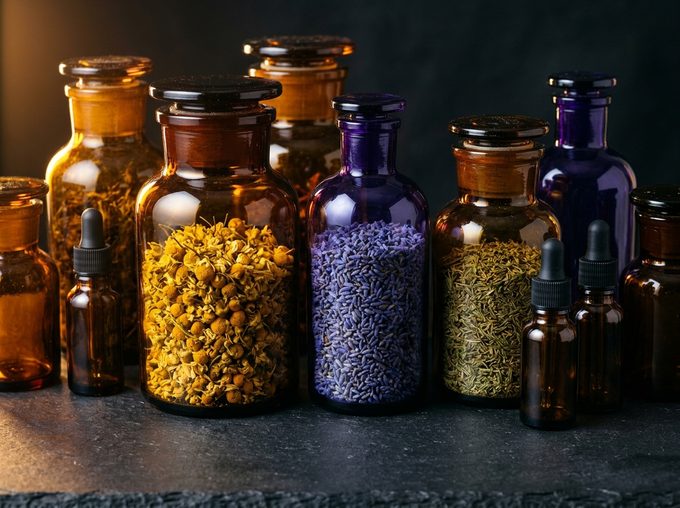
Airtight Amber Glass Herb Jars (8 oz – 16 oz)
- ✓ Wide mouth fits measuring spoons; blocks 99% of UV light
- ✓ Check for metal lids with airtight liners or ground-glass stoppers
- ✓ Ideal for cut-and-sifted leaves, roots, and whole flower heads
Narrow-neck Boston Round bottles are great for liquids, but frustrating for scooping bulky dried flowers—always choose Wide-Mouth packers for dried herbs.
Biophotonic Violet Glass Apothecary Jars
- ✓ Filters visible light spectrum to preserve delicate chlorophyll and aroma
- ✓ Thick European-style apothecary glass walls
- ✓ Best for high-value saffron, calendula, lavender, and matcha
Violet Miron glass costs 3x to 4x more per jar than standard USP Type III amber glass.
2 oz Amber Glass Tincture Bottles with Glass Pipettes
- ✓ Graduated glass droppers for herbal extracts, glycerites, and oils
- ✓ Acid-resistant rubber bulbs and leak-proof phenolic caps
- ✓ Standard size for homemade tinctures and infused botanical oils
Rubber dropper bulbs on tincture bottles eventually soften after 18–24 months of contact with high-proof alcohol vapors and should be replaced periodically.
Material Science & Performance Matrix
| Material / Design Type | Primary Technical Spec | Construction / Seal | Typical Lifespan / Capacity | Best Apothecary Application |
|---|---|---|---|---|
| Amber Soda-Lime Glass (USP Type III) | Blocks >90% of UV & blue light below 450 nm | Plastisol-lined metal lug or phenolic cone cap | 12–24 months peak vibrancy | Best all-around value for 8 oz–32 oz bulk leaf, root & flower storage |
| Biophotonic Violet Glass (Miron Style) | Blocks 100% of visible spectrum except violet (380–420 nm) & near-IR | BPA-free screw cap with airtight induction seal | 24+ months peak chlorophyll retention | Premium choice for delicate green leaves (Nettle, Lemon Balm) & pricey Saffron/Matcha |
| Clear Flint Glass w/ Clamp Bail Lid | 0% visible light filtering (requires dark cabinet) | Silicone gasket + stainless wire bail | 3–6 months on open counter; 18 months in dark pantry | Good only if stored inside a closed, pitch-dark cupboard |
AVOID 'sprayed/coated amber glass'—some cheap decorative jars are actually clear glass sprayed with a thin amber-orange lacquer on the outside that scratches off with a fingernail and peels in warm dishwater. True apothecary amber glass is colored throughout the molten glass with iron and sulfur oxides (check the rim of the jar neck: it should be solid dark amber all the way through).