✦ ♑ JANUARY APOTHECARY ALMANAC • WINTER SIMMER & DECOCTION
January Herbal Almanac: Midwinter Roots & Pine Needles
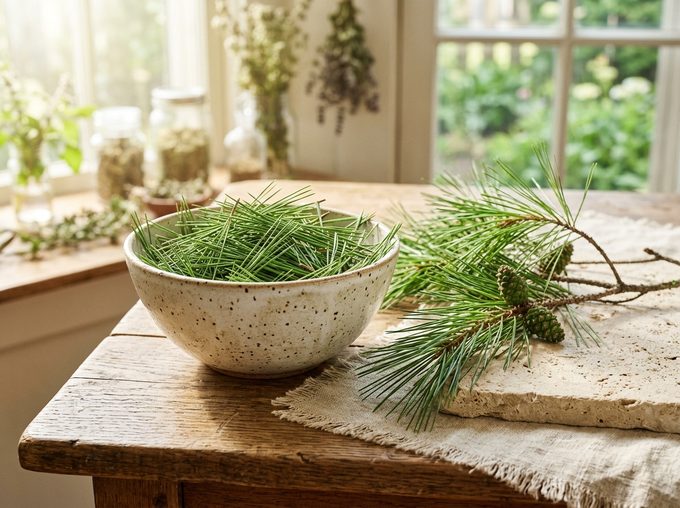
Across the northern temperate zone, deciduous perennials lie dormant beneath frost while evergreen conifers—led by five-needle Eastern White Pine—concentrate protective ascorbic acid and alpha-pinene resins inside their needles to prevent cellular freezing.
🌿 January Harvesting, Foraging & Curing Task
Forage fresh green Eastern White Pine (Pinus strobus) needles from lower wind-fallen branches after winter storms, and audit your amber glass root jars—January is the prime month for slow stovetop decoctions.
🍵 Signature January Recipe: Midwinter White Pine, Ginger & Cinnamon Warmer
Steep 2 tbsp chopped fresh White Pine needles + 4 slices fresh Ginger + 1 crumbled Ceylon Cinnamon quill in 12 oz of 180°F water (covered) for 12 minutes. Strain and stir in 1 tsp raw maple syrup or honey.
JANUARY SPECIMEN MATRIX
Compare All 5 January Botanicals
| Botanical & Binomial | Plant Part | Key Phytochemicals | Organoleptic Palate & Aroma | Dose & Steep (8 oz) |
|---|---|---|---|---|
| White Pine Needle Pinus strobus |
Fresh or gently dried green needles | Alpha-pinene, Beta-pinene, Shikimic acid, Vitamin C, Flavonoids | Crisp, bright, evergreen-citrus, and remarkably sweet-lemony when steeped below boiling. | 4 g – 6 g 175°F–185°F · Steep covered 10–15 min; strain and add a squeeze of lemon or maple syrup |
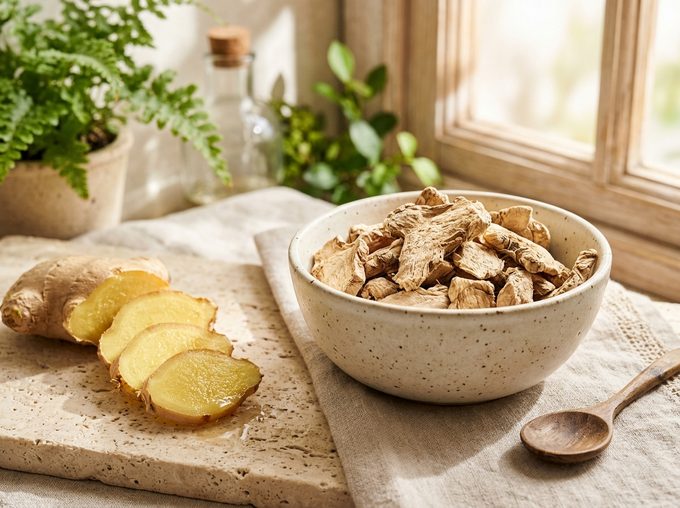
| Ginger Rhizome Zingiber officinale |
Fresh or dried rhizome | Gingerols (fresh), Shogaols (dried), Zingiberene | Fiery, pungent, citrusy-warm, and aromatic. | 2 g – 3 g (1 tsp dried) 205°F–212°F covered simmer · Simmer 10–15 min covered |
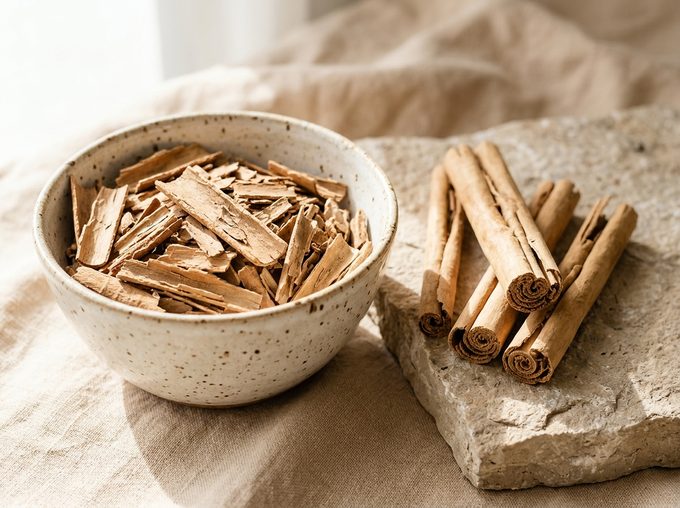
| Ceylon Cinnamon Cinnamomum verum |
Hand-rolled inner bark quills | Cinnamaldehyde, Eugenol, Proanthocyanidins (Ultra-low Coumarin) | Delicate, warm, citrus-floral, and complexly sweet without the harsh, tongue-burning red-hot bite of common supermarket cassia. | 1 whole 3-inch Ceylon quill 205°F–212°F covered simmer · Simmer 12–15 min |
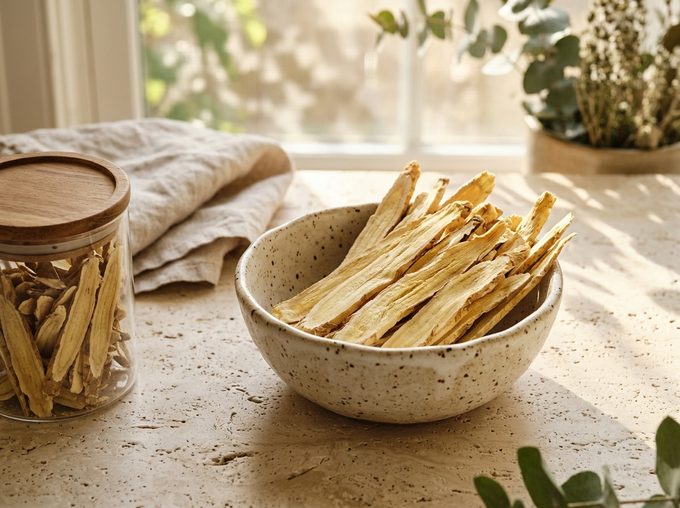
| Astragalus Root Astragalus membranaceus |
Sliced dried 4-year root | Astragalosides (I–VII), Calycosin, Polysaccharides, Saponins | Mildly sweet, starchy, and pleasantly legume-earthy, reminiscent of mild roasted parsnip or sweet yellow split peas. | 5 g – 9 g 205°F–212°F low simmer · Simmer covered 25–35 min in water or soup stock |
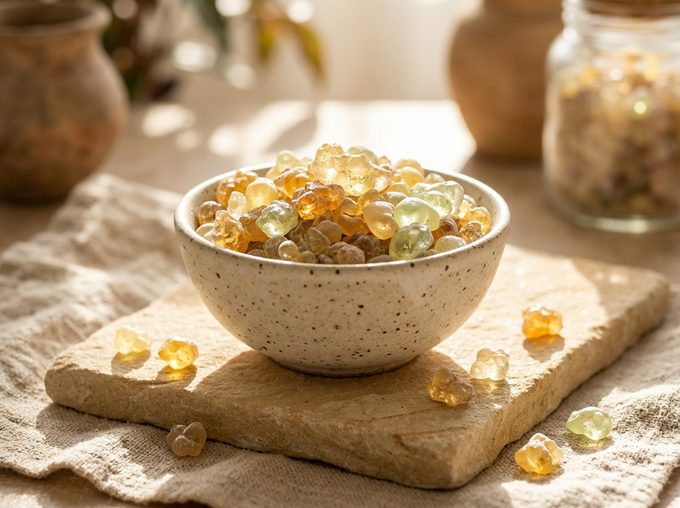
| Sacred Frankincense Boswellia sacra |
Dried oleogum resin tears | Boswellic acids (AKBA), Alpha-pinene, Incensole acetate, Limonene | Aromatically luminous, crisp Meyer-lemon citrus, fresh pine needle, and sweet balsamic honey-wood. | 1 to 2 pea-sized Hojari resin tears on a thin copper/aluminum plate over a tealight candle 250°F–320°F gentle radiant heat · Melts slowly over 45–60 min, releasing pure lemon-pine vapor with ZERO burnt smoke |
JANUARY ALMANAC Q&A
Frequently Asked Questions About January Herbal Craft
What is the best apothecary preparation method for January (Winter Simmer & Decoction)?
In January, Across the northern temperate zone, deciduous perennials lie dormant beneath frost while evergreen conifers—led by five-needle Eastern White Pine—concentrate protective ascorbic acid and alpha-pinene resins inside their needles to prevent cellular freezing. Because of these seasonal conditions, herbalists emphasize winter simmer & decoction—Forage fresh green Eastern White Pine (Pinus strobus) needles from lower wind-fallen branches after winter storms, and audit your amber glass root jars—January is the prime month for slow stovetop decoctions.
How do you make the signature January herbal recipe (Midwinter White Pine, Ginger & Cinnamon Warmer)?
Steep 2 tbsp chopped fresh White Pine needles + 4 slices fresh Ginger + 1 crumbled Ceylon Cinnamon quill in 12 oz of 180°F water (covered) for 12 minutes. Strain and stir in 1 tsp raw maple syrup or honey. Always store unused dried botanicals in airtight UV-blocking amber glass away from direct stove heat.
EXPLORE ALL 12 MONTHS OF THE BOTANICAL ALMANAC