Peppermint
Cooling Menthol Hybrid of Watermint & Spearmint.
Explore the common forms, learn a little about the plant, and choose what suits your cupboard.
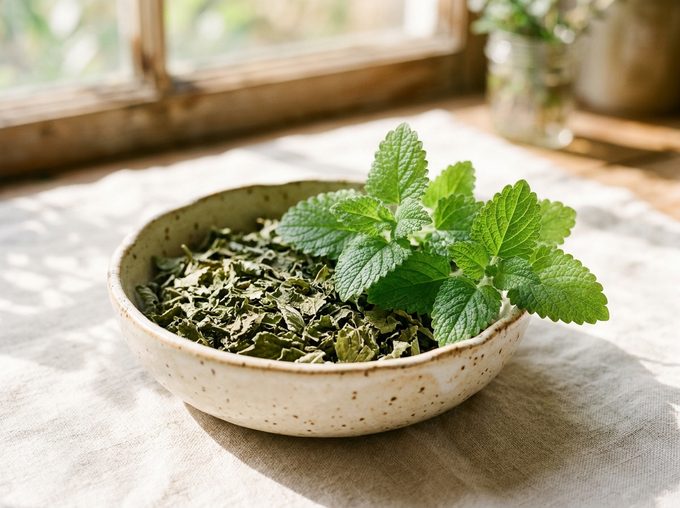
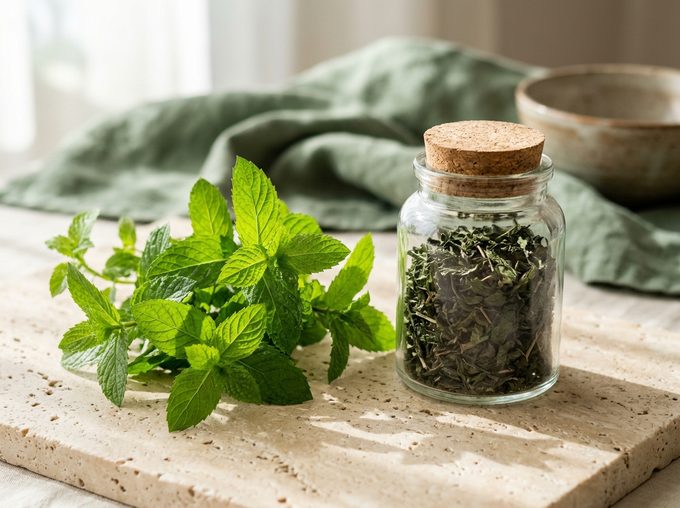
Whole cut-and-sifted peppermint leaves for steeping and blending.
A little about peppermint.
The plant
Intensely brisk, sweet-herbaceous, and peppery at first sip, followed by a prolonged, clean menthol cooling sensation across the palate. Native to Europe & Pacific Northwest (Lamiaceae (Mint Family)).
The forms
Most often prepared as a after-dinner carminative tea using 2 g (1 heaping tbsp cut leaf) at 200°F (93°C) (7–10 min covered).
Before you choose
Check the label for the Latin name (Mentha × piperita), and choose the form that suits your cupboard.
Traditional uses & research +
Botanical taxonomy: Mentha × piperita (Lamiaceae (Mint Family)) · Tradition: Digestive & Carminative · Key constituents: Menthol, Menthone, Menthyl acetate, Rosmarinic acid.
Curated collections: Digestive Bitters & Warming Spices · Aromatic Steams & Soothing Leaves · Beginner's Home Apothecary Starter Shelf · Seasonal almanac: March Almanac (Early Spring Mineral Greens & Bitters) · July Almanac (High-Summer Mint, Basil & Meadow Nervines).
Traditional background: First described botanically in England in 1696 as a natural hybrid of watermint and spearmint, Mentha × piperita quickly became the world's most popular after-dinner infusion leaf.
Everyday & kitchen uses: Served hot or iced as a refreshing digestif tea, blended with chamomile or ginger, or used in botanical facial steams.
Standard preparation methods (compare all 50 steeping temperatures):
- After-Dinner Carminative Tea (2 g (1 heaping tbsp cut leaf) at 200°F (93°C)): 7–10 min covered
- Cold-Brew Summer Mint Pitcher (10 g (1/3 cup dried leaf) per 1 quart cold filtered water at 40°F refrigerator steep): Steep 4–6 hours cold, then strain for zero tannin bitterness
- Digestive Mint-Fennel Blend (1 tbsp peppermint + 1 tsp crushed fennel seed at 200°F (93°C)): Steep 8 min covered
Cautions & interactions +
Who should use caution: Because peppermint relaxes smooth muscle—including the lower esophageal sphincter—individuals with severe acid reflux (GERD) or hiatal hernia may find that strong peppermint tea triggers heartburn. In those cases, chamomile or fennel is preferred. Never apply peppermint oil near the faces of infants or young children.
Species & lookalike verification: True Peppermint (Mentha × piperita) is a sterile natural hybrid of Watermint (Mentha aquatica) and Spearmint (Mentha spicata). Unlike Spearmint—which contains carvone and tastes sweet and gentle like chewing gum with almost zero menthol—Peppermint contains 35%–55% free menthol and menthone, giving it a distinct icy-cooling finish and purple-flushed square stems.
Cupboard storage (amber glass guide): Store peppermint in a separate airtight jar so its strong menthol aroma does not permeate milder floral herbs.
Sources & further reading +
What is the difference between peppermint and spearmint in tea?
Chemically, peppermint is dominated by menthol (which activates TRPM8 cold receptors on your tongue, creating an icy sensation), whereas spearmint contains less than 1% menthol and is flavored by carvone, making spearmint softer, sweeter, and gentler for those sensitive to strong menthol.
Why should people with acid reflux be cautious with peppermint tea?
Peppermint's antispasmodic action relaxes smooth muscle throughout the digestive tract. While that is helpful for lower intestinal cramping, it also relaxes the sphincter valve between the stomach and esophagus, which can allow stomach acid towash upward in people prone to reflux.
Does peppermint tea contain any caffeine?
Zero. Mentha × piperita is completely caffeine-free; its invigorating feel comes entirely from volatile menthol and menthone stimulating cold-sensitive trigeminal nerve endings.
Why did my dried peppermint turn dark brown in the pantry?
Peppermint leaves are thin and rich in chlorophyll and volatile oils that oxidize rapidly when exposed to kitchen heat or clear glass sunlight. Store bulk mint in airtight amber glass in a cool cupboard.
Companion Moss & Thyme guides & tools:
- Herbarium Journal: Evening Botanical Tea Rituals & Blending →
- Equipment Guide: Best Loose-Leaf Tea Infusers & Gooseneck Kettles →
- Interactive Calculator: Interactive 3-Part Tea Blend Synergy Builder →
Botanical references:
- Royal Botanic Gardens, Kew — Plants of the World Online: Mentha × piperita Taxonomic Record ↗
- PubChem / NIH National Library of Medicine: Phytochemical Profile (Menthol) ↗
- European Medicines Agency (EMA) HMPC & German Commission E Herbal Monographs.
See the herb in context.
Watch our video guide The Most Powerful Herbs in the World, Explained and explore the plants it introduces.
Explore another herb.