Great Mullein Leaf
Velvet Dock & Candlewick • Soft Silver-Woolly Rosette Leaf.
Explore the common forms, learn a little about the plant, and choose what suits your cupboard.
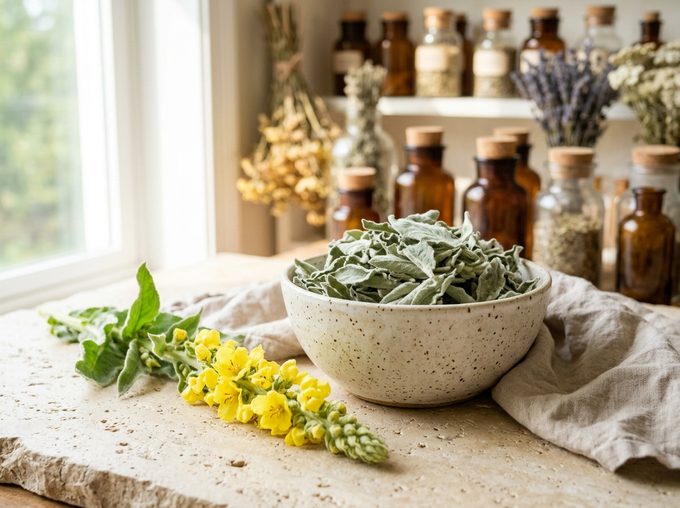
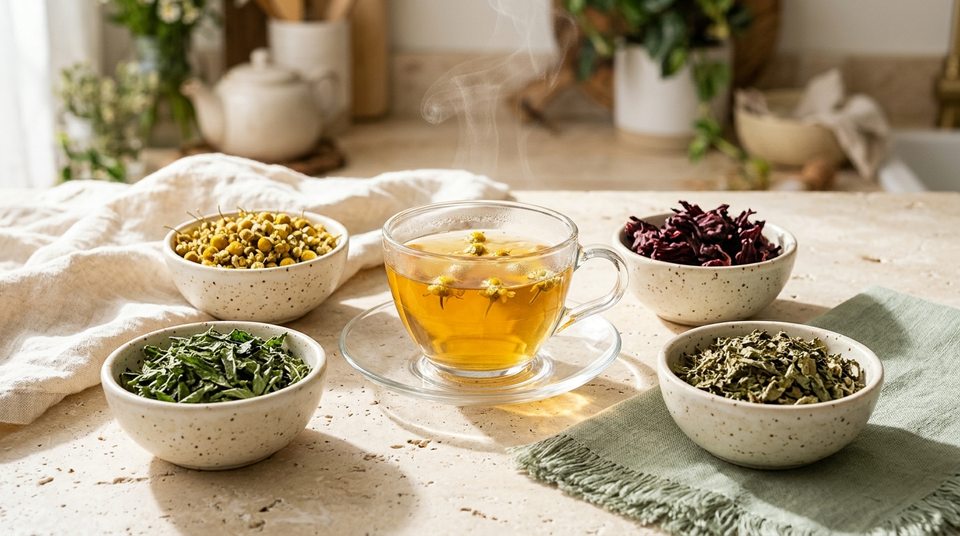
Whole dried great mullein leaf flowers for steeping and infusions.
A little about great mullein leaf.
The plant
Mild, soft, slightly sweet-vegetal, and neutral-earthy with a soothing demulcent finish. Native to Europe, North Africa & Asia (Scrophulariaceae).
The forms
Most often prepared as a fine-strained leaf infusion (mandatory) using 2 g – 3 g (1.5 to 2 tbsp dried woolly leaf) at 200°F–205°F (93°C–96°C) (Steep 10–15 min covered, then strain through a paper coffee filter or fine cloth).
Before you choose
Check the label for the Latin name (Verbascum thapsus), and choose the form that suits your cupboard.
Traditional uses & research +
Botanical taxonomy: Verbascum thapsus (Scrophulariaceae) · Tradition: Soothing Demulcents · Key constituents: Mucilage polysaccharides, Verbascoside, Saponins, Flavonoids.
Curated collections: Aromatic Steams & Soothing Leaves · Seasonal almanac: June Almanac (Midsummer Blossoms) · October Almanac (Autumn Roots).
Traditional background: Romans dipped dried mullein flower stalks in tallow to use as ceremonial torches (candela), while country herbalists knew its soft rosette leaves as 'Velvet Dock' and 'Flannel Leaf'.
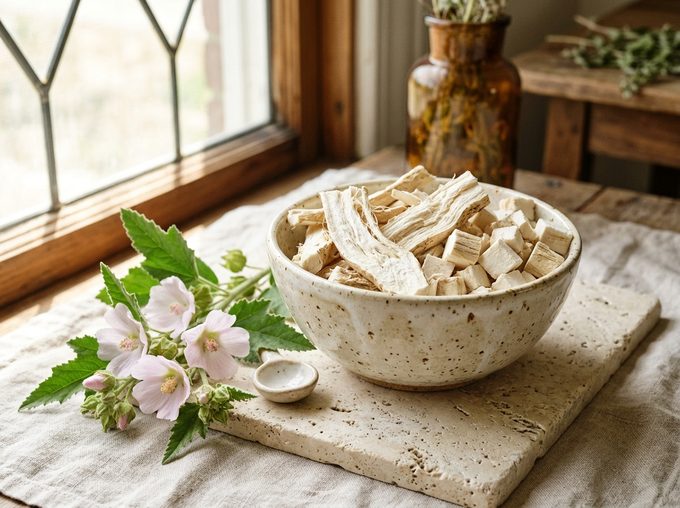
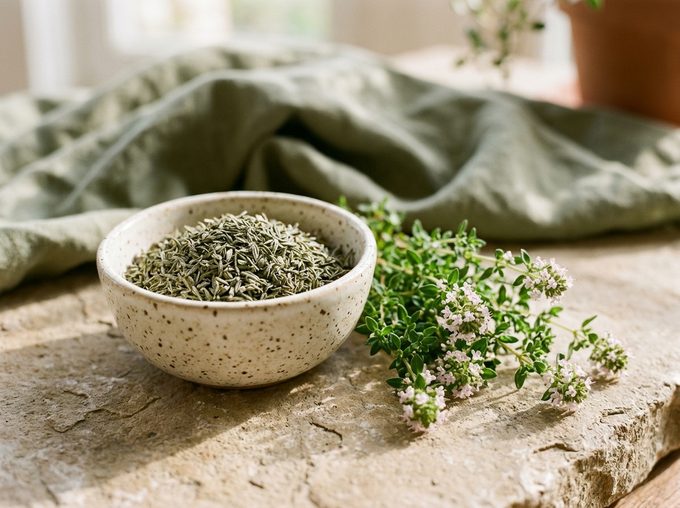
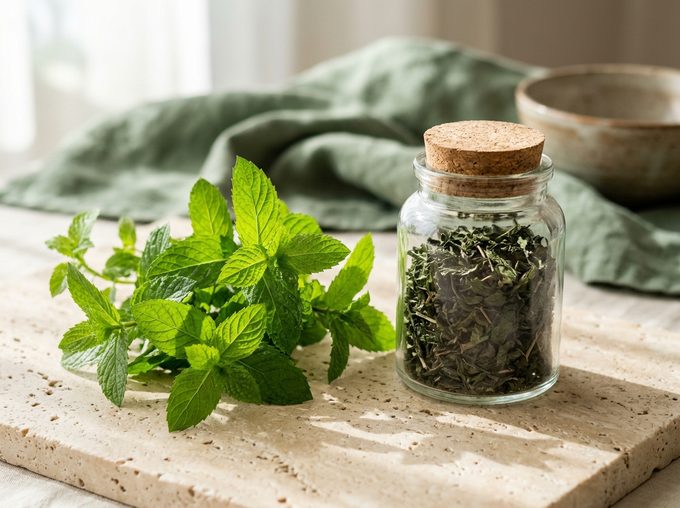
Everyday & kitchen uses: Steeped and fine-strained with peppermint, thyme, or marshmallow root for soothing winter infusions and aromatic facial steams.
Standard preparation methods (compare all 50 steeping temperatures):
- Fine-Strained Leaf Infusion (Mandatory) (2 g – 3 g (1.5 to 2 tbsp dried woolly leaf) at 200°F–205°F (93°C–96°C)): Steep 10–15 min covered, then strain through a paper coffee filter or fine cloth
- Mullein-Thyme-Peppermint Steam/Tea (1 tbsp mullein + 1 tsp thyme + 1 tsp peppermint at 200°F covered steep): Steep 12 min; filter through unbleached paper filter
- Traditional Mullein Flower Ear Oil (Fresh yellow mullein corollas wilted 12 hrs to remove dew, covered in olive oil at Warm solar/bath infusion): For external ear comfort only (never if eardrum is perforated)
Cautions & interactions +
Who should use caution: MANDATORY STRAINING RULE: The velvety softness of Mullein leaf comes from millions of microscopic, star-shaped branching hairs (stellate trichomes). If you use a standard wide-hole metal tea ball, those tiny hairs float into the tea and tickle the back of the throat, triggering a cough! Always pour mullein tea through a paper coffee filter, tightly woven muslin bag, or ultra-fine mesh strainer. Note: Mullein seeds contain piscicidal rotenone/saponins and are never consumed.
Species & lookalike verification: Great Mullein (Verbascum thapsus, family Scrophulariaceae) is a biennial plant that forms a low basal rosette of thick, silver-grey, flannel-soft woolly leaves in Year 1, then shoots up a single 6-foot candle-like spike of 5-petaled yellow flowers in Year 2.CRITICAL FORAGING DISTINCTION: Never confuse first-year Mullein rosettes with Foxglove (Digitalis purpurea)—Foxglove leaves are greener, hairier-rough (not thick silver-white velvet felt), have scalloped veins, and contain potentially fatal cardiac glycosides (digoxin/digitoxin).
Cupboard storage (amber glass guide): Fluffy, low-density leaves require a roomy glass jar kept dry and dark.
Sources & further reading +
Why MUST you strain Mullein leaf tea through a coffee filter or cloth bag?
Mullein leaf is covered in dense, branching stellate hairs (trichomes) that insulate the plant against sun and drought. In hot water, those tiny stiff hairs detach from the leaf. While completely non-toxic, unstrained hairs physically tickle the pharynx—pouring the steeped tea through a paper coffee filter or cotton tea sock removes 100% of the hairs, leaving a crystal-clear, soothing golden cup.
How do you tell a first-year Mullein rosette apart from toxic Foxglove in the wild?
Touch the leaf: Verbascum thapsus feels like thick, plush silver-grey rabbit fur or baby flannel on both sides, with winged leaf bases. Foxglove (Digitalis purpurea) is much darker green on top, thinner, and lacks the dense silver-white felt coat.
What is the difference between Mullein Leaf and Mullein Flower?
Mullein Leaf is the primary apothecary part steeped for soothing respiratory and demulcent infusions (rich in mucilage polysaccharides, verbascoside, and saponins). Mullein Flowers (the bright yellow petals picked one by one from the tall summer spike) are sweeter and traditionally macerated in olive oil.
Why was Mullein called 'Hag's Taper' and 'Candlewick Plant' in medieval Europe?
Before cotton wicks were affordable, country folk dipped the tall dried stalks of second-year mullein in tallow or beeswax to burn as outdoor torches, or peeled the fluffy down from the leaves to spin into oil-lamp wicks.
Companion Moss & Thyme guides & tools:
- Herbarium Journal: Evening Botanical Tea Rituals & Blending →
- Equipment Guide: Best Loose-Leaf Tea Infusers & Gooseneck Kettles →
- Interactive Calculator: Interactive 3-Part Tea Blend Synergy Builder →
Botanical references:
- Royal Botanic Gardens, Kew — Plants of the World Online: Verbascum thapsus Taxonomic Record ↗
- PubChem / NIH National Library of Medicine: Phytochemical Profile (Mucilage polysaccharides) ↗
- European Medicines Agency (EMA) HMPC & German Commission E Herbal Monographs.
See the herb in context.
Watch our video guide The Most Powerful Herbs in the World, Explained and explore the plants it introduces.
Explore another herb.