Hibiscus
Agua de Jamaica & Karkadeh • Tart Ruby-Crimson Flower Calyces.
Explore the common forms, learn a little about the plant, and choose what suits your cupboard.
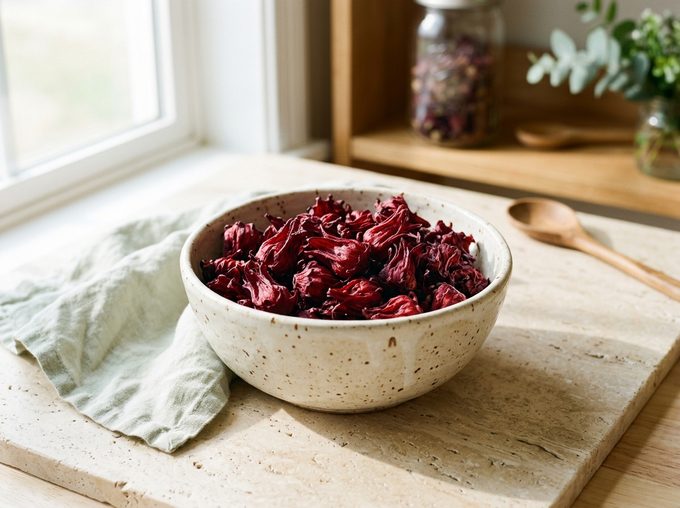
Whole dried hibiscus for steeping, blending, and cupboard jars.
A little about hibiscus.
The plant
Vibrantly tart, cranberry-citrus sour, and fruity-floral with a jewel-like ruby-crimson infusion color. Native to West Africa, Sudan & Tropical Americas (Malvaceae).
The forms
Most often prepared as a hot ruby infusion using 2 g – 3 g (1 tbsp whole or cut dried calyces) at 195°F–200°F (90°C–93°C) (5–7 min (steeping >10 min increases sourness & astringency)).
Before you choose
Check the label for the Latin name (Hibiscus sabdariffa), and choose the form that suits your cupboard.
Traditional uses & research +
Botanical taxonomy: Hibiscus sabdariffa (Malvaceae) · Tradition: Nutritive & Berry Tonics · Key constituents: Anthocyanins (Delphinidin, Cyanidin), Hibiscus acid, Vitamin C.
Curated collections: Ruby Berries & Floral Tisanes · Beginner's Home Apothecary Starter Shelf · Seasonal almanac: June Almanac (Midsummer Blossoms) · October Almanac (Autumn Roots).
Traditional background: Beloved across Egypt and Sudan as Karkadeh, across Mexico as Agua de Jamaica, and across the Caribbean as Sorrel, it is the fleshy calyx cup holding the seed pod—not the thin petal—that is dried for tea.
Everyday & kitchen uses: Cold-brewed overnight with peppermint and lime, or steeped hot with cinnamon and ginger.
Standard preparation methods (compare all 50 steeping temperatures):
- Hot Ruby Infusion (2 g – 3 g (1 tbsp whole or cut dried calyces) at 195°F–200°F (90°C–93°C)): 5–7 min (steeping >10 min increases sourness & astringency)
- Cold-Brew Agua de Jamaica (1/2 cup dried hibiscus calyces + 1 cinnamon quill in 1 quart cold water at Refrigerator cold steep): Steep 6–8 hours cold, strain, and sweeten with agave or honey
- Hibiscus-Mint-Ginger Cooler (1 tbsp hibiscus + 1 tbsp peppermint + 3 slices fresh ginger at 200°F steep, then ice): Steep 6 min, strain over ice
Cautions & interactions +
Who should use caution: Because Hibiscus sabdariffa is high in natural organic fruit acids (pH ~2.5–3.0), rinse your mouth with plain water after drinking to protect tooth enamel. Clinical trials show hibiscus tea modestly lowers blood pressure; individuals with hypotension (low blood pressure) or taking antihypertensive medications should monitor their levels. Avoid concentrated hibiscus extracts during pregnancy.
Species & lookalike verification: CRITICAL BOTANICAL DISTINCTION: Culinary/tea hibiscus is exclusively Roselle (Hibiscus sabdariffa), and the part steeped is NOT the flower petal—it is the fleshy, deep burgundy-crimson calyx (the cup-like sepal structure that swells after the pale yellow flower petals drop off). Ornamental garden hibiscus shrubs (Hibiscus rosa-sinensis or Rose of Sharon Hibiscus syriacus) do not produce tart, anthocyanin-rich fleshy calyces.
Cupboard storage (amber glass guide): Keep dry and sealed; high natural fruit acids attract moisture in humid kitchens.
Sources & further reading +
Can I make hibiscus tea from the hibiscus bush in my backyard?
Only if you are growing Roselle (Hibiscus sabdariffa)! Most backyard hibiscus are tropical Hibiscus rosa-sinensis or hardy Rose of Sharon (Hibiscus syriacus). While their petals are non-toxic, they taste mucilaginous and grassy—the ruby-red, cranberry-tart tea famous around the world comes strictly from the dried fleshy calyces of Hibiscus sabdariffa.
Why is cold-steeped Hibiscus (Agua de Jamaica) smoother than boiling-water Hibiscus?
Steeping dried hibiscus calyces in cold water in the fridge for 6 hours extracts 100% of the ruby delphinidin and cyanidin anthocyanins along with bright fruit acids, while leaving behind the heavier tannins that can make boiling-water hibiscus taste overly puckery.
Why does hibiscus tea turn blue-grey if you mix it with alkaline water or baking soda?
Hibiscus anthocyanins are natural pH indicators! In acidic water (or with lemon juice), they glow brilliant ruby-red; in neutral-to-alkaline hard tap water (pH > 7.5), the pigment shifts toward violet, slate-blue, or grey-green.
What herbs balance the intense sourness of Hibiscus without using lots of sugar?
Sweet fennel seed, cinnamon bark, stevia leaf, licorice root, and sweet orange peel naturally round out hibiscus's sharp cranberry tartness.
Companion Moss & Thyme guides & tools:
- Herbarium Journal: Evening Botanical Tea Rituals & Blending →
- Equipment Guide: Best Loose-Leaf Tea Infusers & Gooseneck Kettles →
- Interactive Calculator: Interactive 3-Part Tea Blend Synergy Builder →
Botanical references:
- Royal Botanic Gardens, Kew — Plants of the World Online: Hibiscus sabdariffa Taxonomic Record ↗
- PubChem / NIH National Library of Medicine: Phytochemical Profile (Anthocyanins (Delphinidin) ↗
- European Medicines Agency (EMA) HMPC & German Commission E Herbal Monographs.
See the herb in context.
Watch our video guide The Most Powerful Herbs in the World, Explained and explore the plants it introduces.
Explore another herb.